
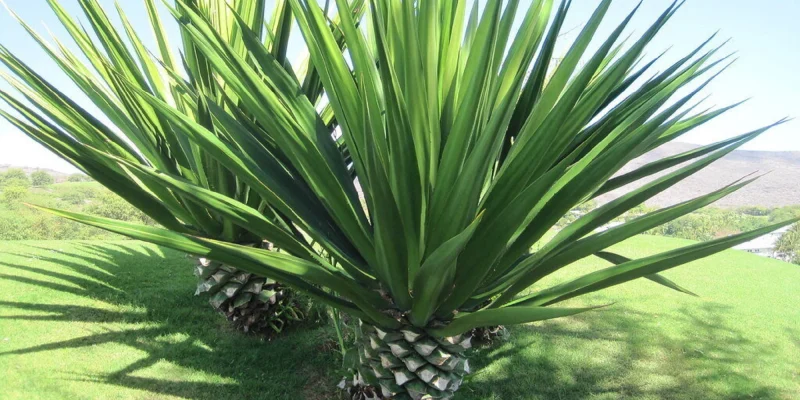
Stemless or very short-stemmed, they have numerous, thick, rosette-shaped leaves up to 1.50 m long. They are green to bluish, ending in a straight, very hard tip. The leaf edges are often trimmed with short spines, broad at the base. A cylindrical axis 5 to 7 meters high bears flowers grouped in a pyramidal panicle. They are orange-yellow. These characteristics vary from species to species. The plant dies after flowering.
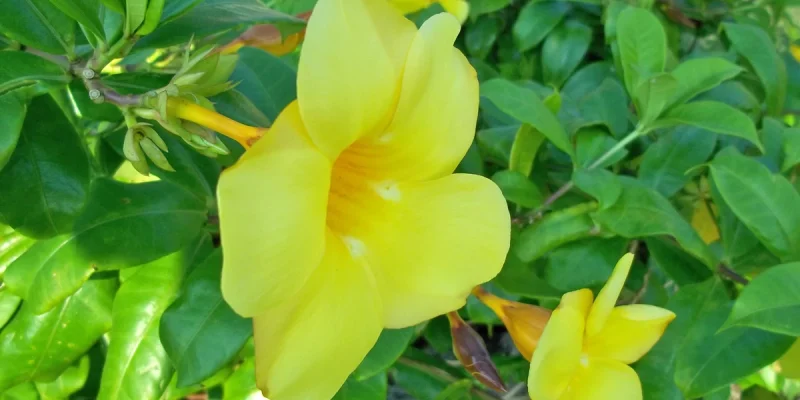
Native to Brazil and French Guiana, Allamanda Cathartica, or Yellow Allamanda, likes very sunny, humid environments. So its presence in tropical environments should come as no surprise! It is often found in hedges with golden-yellow flowers and a delicately fruity fragrance. Frequent watering will ensure a healthy shrub, sometimes reaching several meters in height, and year-round flowering!
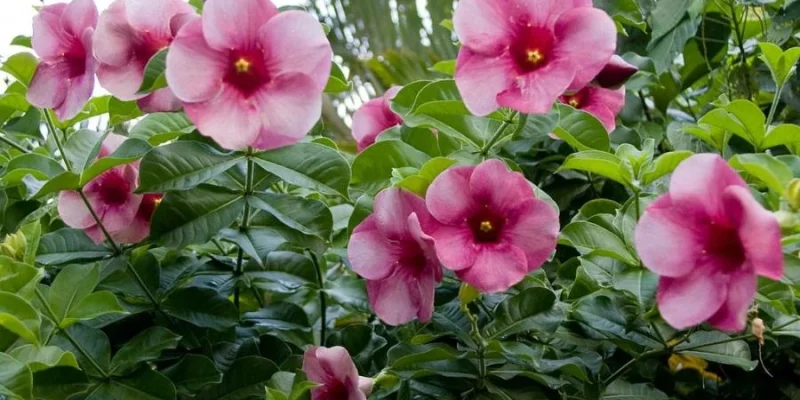
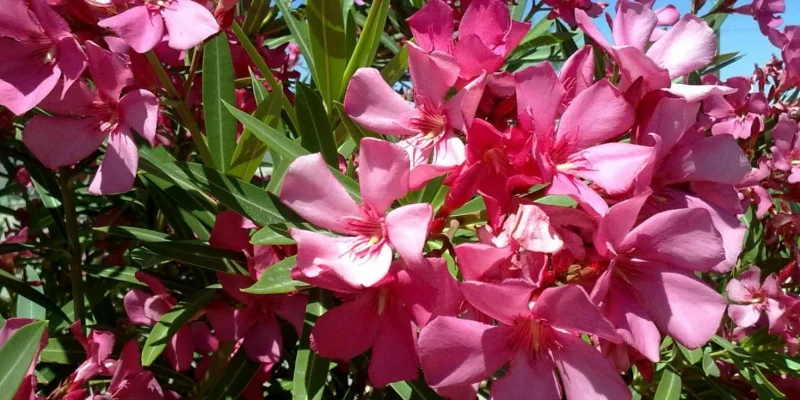
Woody plant native to tropical Africa, grown for ornamental purposes. Rough stems and tough leaves. Flowers are mauve-pink and large, 5 to 7 cm in diameter. Resistant to drought, it grows in a variety of soils and in sunny locations. Used to decorate garden fences. The small, brown seeds are contained in a follicle.
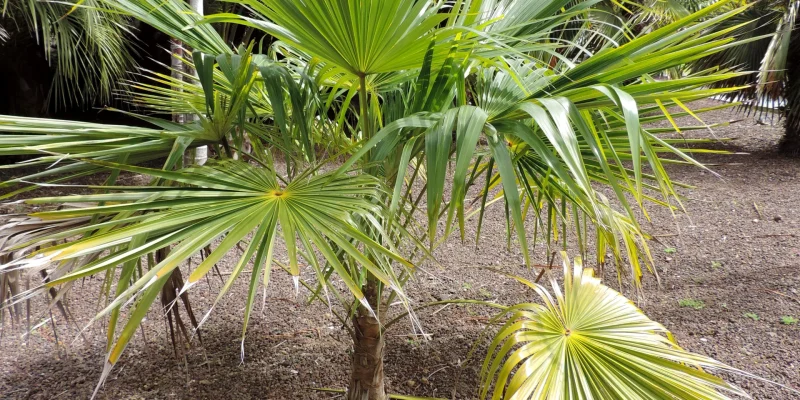
A small palm of varied size, very ornamental. Average height: 4 to 10 meters. The cylindrical stipe (the name given to the unbranched trunk of palm trees) has a diameter of 8 to 20 cm. The fruit is a small, black, globular, pulpy drupe around 7 to 9 mm in diameter. The leaf is widely used to make brooms.
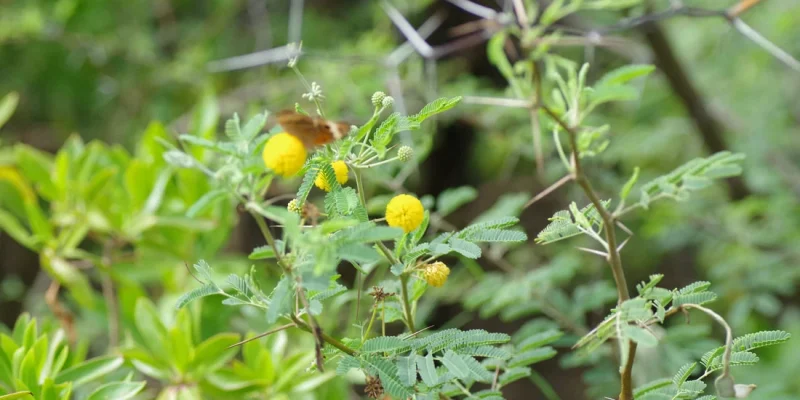
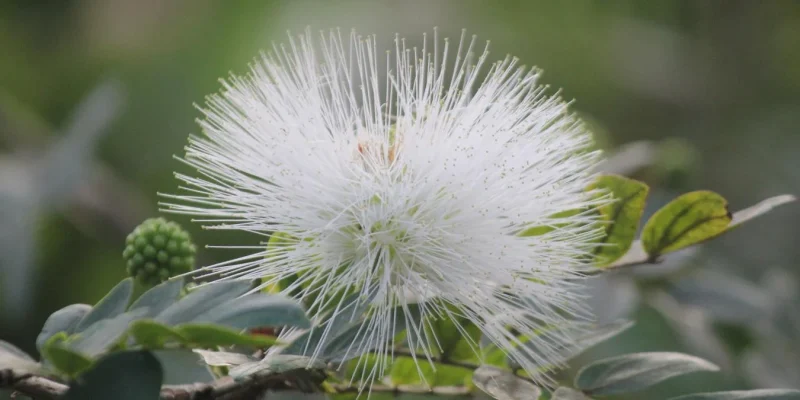
A sarmentose shrub with thin, very long branches bearing rare, short thorns. Leaves have 4 to 6 pairs of pinnae, each with 7 to 20 pairs of leaflets. The flowers form globular flower heads 10 to 15 mm in diameter, arranged in widely-spreading clusters. They are white in color. The fruit is a thin, flat pod containing small brown seeds.
Liana, native to Mexico and naturalized throughout the West Indies. It grows wild, attached by tendrils to old walls, rocks, dead trees or fences. Needs sun and humidity to flower. The bright pink flowers are grouped in single clusters terminated by tendrils at the ends of branches or at the base.
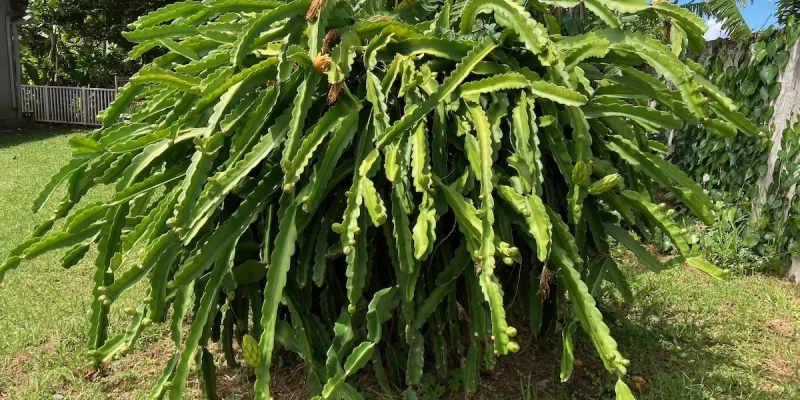
Climbing and creeping plant native to Mexico. The stem has 3 crenellated wings with horny edges and sometimes aerial roots. It bears a few small, very short spines. The very large flowers are nocturnal. They contain numerous stamens. The fruit is a scaly berry. Sometimes grown as an ornamental plant.
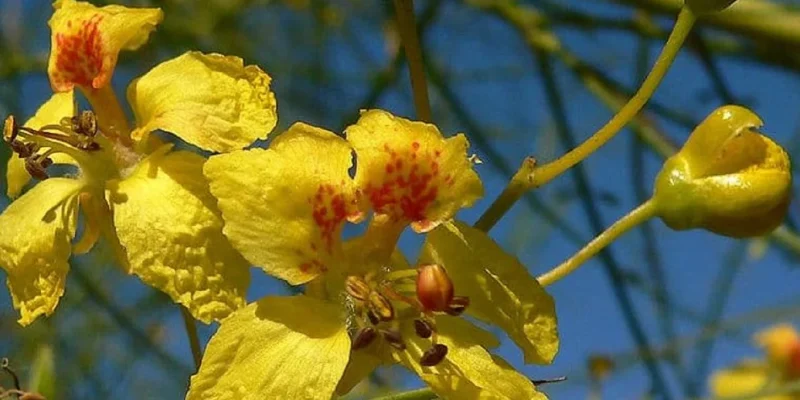
A small ornamental tree with very distinctive foliage. The bark is gray and the branches have thorny twigs. Leaves are clustered at the ends of the branches. They are strip-shaped, up to 25cm long and 1mm wide, with numerous very small leaflets. The fruit is a pale, brown, linear, indehiscent pod measuring between 10 and 15 cm in length.
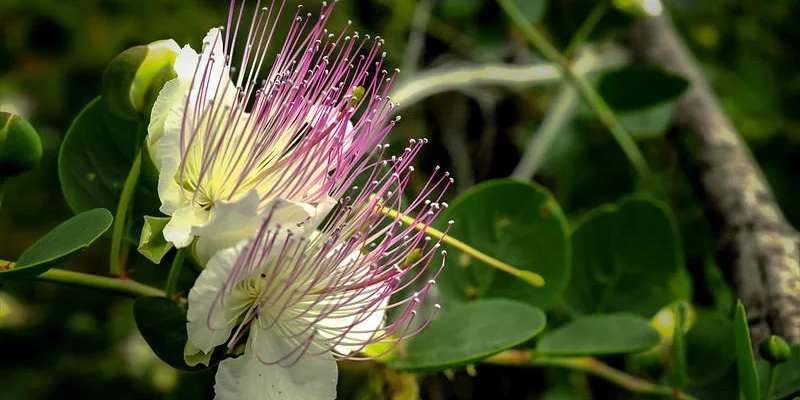
Shrub or small tree, native to the West Indies and found in all dry, rocky areas. The simple, evergreen leaves are a particularly dull green. Fragrant, white flowers are grouped in terminal inflorescences and produce an elongated, light-brown fruit. The inside of the fruit is bright red. Blooms between March and July.
A thorny shrub found in dry, rocky areas. Flowers are white to yellowish, in terminal or axillary clusters forming a globose flower head (small, tightly-packed flowers). The fruit is a compressed, spiral-shaped pod, red inside. The seeds are shiny black and partially covered. It flowers all year round, more precisely from February to May.
A shrub with steep branches and small, dark-green, pointed leaves, native to Africa. The solitary, trumpet-shaped, slightly curved flowers are purple with orange throats or white with yellow throats. Grows in a variety of soils and is fairly drought-resistant. Blooms most abundantly from September to March.
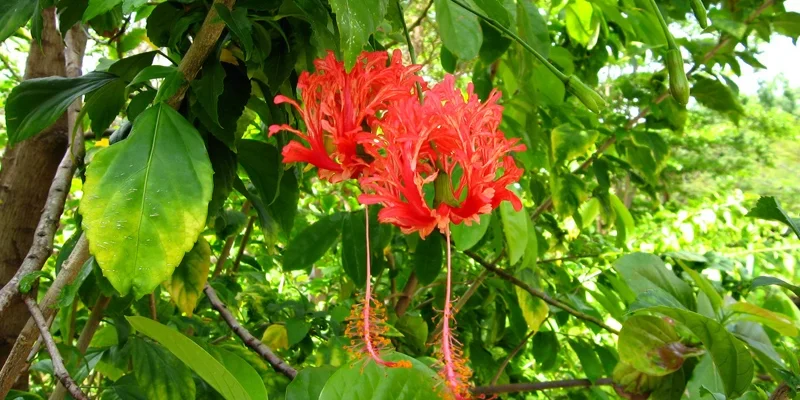
Known as the "Japanese lantern" because of the unique shape of its flowers, the Hibiscus Schizopetalus is a true beauty! Native to the tropical zone of East Africa, it is less floriferous than other species, but is much appreciated by the public...and by hummingbirds! It blooms from summer to autumn, and if you want to take good care of it, be sure to water it regularly!
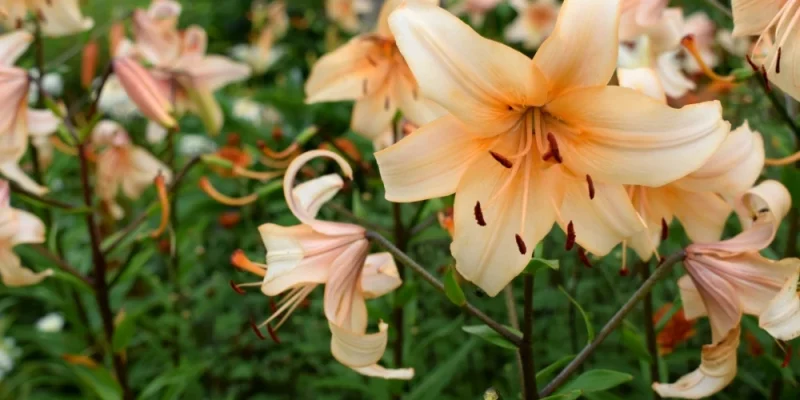
Saint-Martin / Sint Maarten is home to the king flower, which comes in a variety of colorful varieties. Among others, you'll find the Oriental lily, whose deep pink color, bordered by a white line, makes it a small work of art. A sun-loving plant, the lily needs to be kept in the shade. But be careful not to expose it to strong winds, and watch out for aphids...
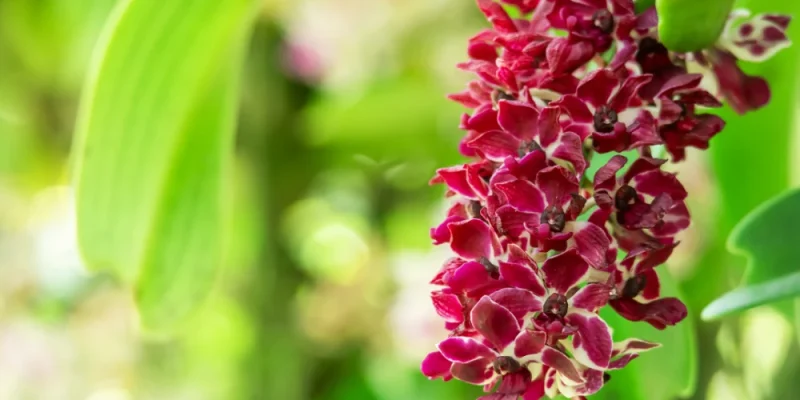
There are many wild orchids on the island, such as the Oncidium Urophyllum, or "Golden Bee", found on small trees in dry, rocky areas. It flowers for only three months, from April to June, unlike Epidendrum Ciliare, which can be admired all year round. As for this species, native to tropical America, it prefers rocks to trees! And finally, the Phalaenopsis or butterfly orchid. Known and admired for their delicacy, they prefer to stay in the shade!
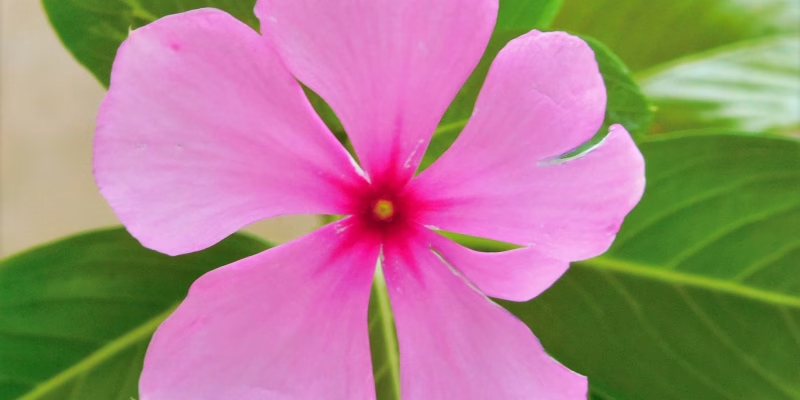
This plant, of little-known origin, probably from South America, is cultivated and naturalized throughout the tropics. Extremely hardy, it grows almost wild on dry coastlines and seashore sands. It grows low to the ground and rarely reaches 80 cm in height. The flowers are numerous, grouped in twos or threes and pink, mauve or white in color.
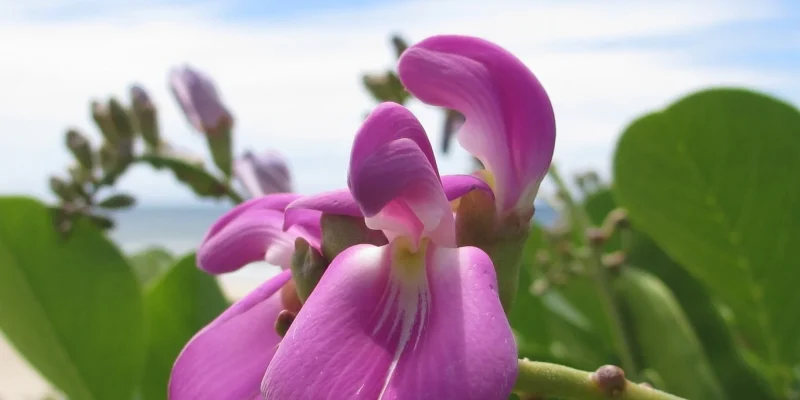
A strong, creeping liana that can sometimes cover entire beaches. Its thick, fleshy, trifoliate leaves are numerous and provide perfect coverage, contrasting nicely with the white sand of the beaches. Its small, papilionaceous, mauve to pink flowers have a rounded standard. The pods, 10 to 15 cm long, are straight or slightly curved and end in a short beak; they contain 5 to 10 smooth, brown seeds covered with a white down.
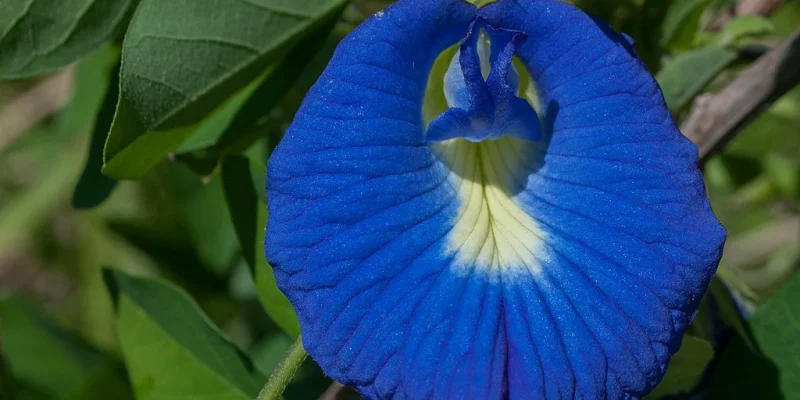
An ornamental plant, this fast-growing, pale-leaved creeper is short-lived. Its solitary, single or double flowers are purple, blue or, more rarely, white, with a yellowish spot at the base of the standard. The fruit is a flattened pod 6 to 12 cm long, containing 5 to 9 small seeds.
Calliandra Portoricensis, better known as the "Sailor's Pompon", is native to Central America. This shrub with its magnificent bright red flowers requires plenty of heat, regular watering and does not like to be moved. Flowering takes place from winter to spring, depending on the climate, and one look is all it takes to understand the origin of its nickname. It remains to be seen whether touching it brings good luck!
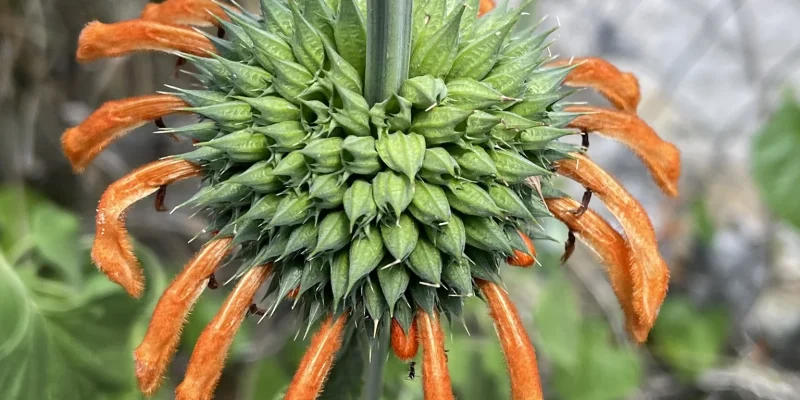
Large, upright, more or less rigid annual grass. Height 60 to 120 cm. Found on roadsides, dry savannahs and sandy soils. Has a single, sparsely branched stem and toothed, long-stalked leaves. Inflorescence in solitary, spherical glomerules around 4 to 5 m in diameter, distributed along a single axis and bearing orange flowers. Widespread throughout the island in the past, this species seems to be becoming increasingly rare.
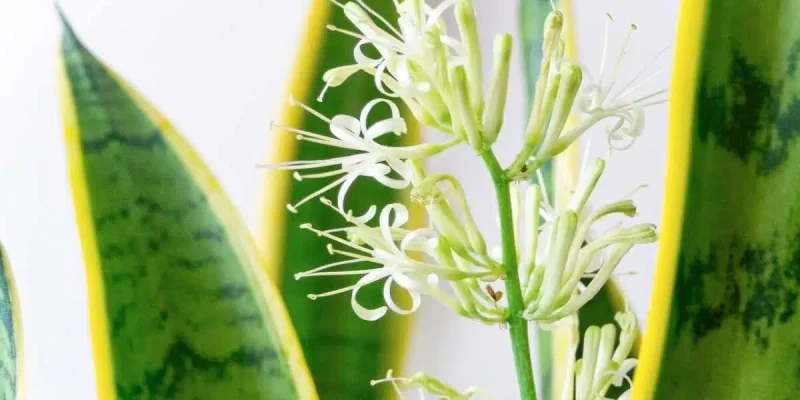
Perennial herb with a horizontal rhizome (underground stem), native to tropical Africa. The basal tufted leaves are almost flat, long and narrow, more or less dark green with white marbling. The inflorescence is at least as long as the leaves, with white flowers grouped on the main axis. Highly resistant to drought and adapted to our climatic conditions, this grass multiplies very easily by its stoloniferous rhizome or by cuttings simply by separating clumps. There are several imported horticultural species and varieties on the island.