Carnival is coming, so get out there!
Since its invention 2,000 years ago, from Antiquity to the Belle Epoque, Carnival has evolved over time. The events are specific to each civilization, but the notion of upsetting social roles and statuses is retained.
This concept served oppressed social classes or peoples with grievances. It was an opportunity to express sometimes ancestral frustrations and anger. Once a year, almost anything goes!
Mockery of oneself or others, past or present, is one of the cornerstones of carnival.
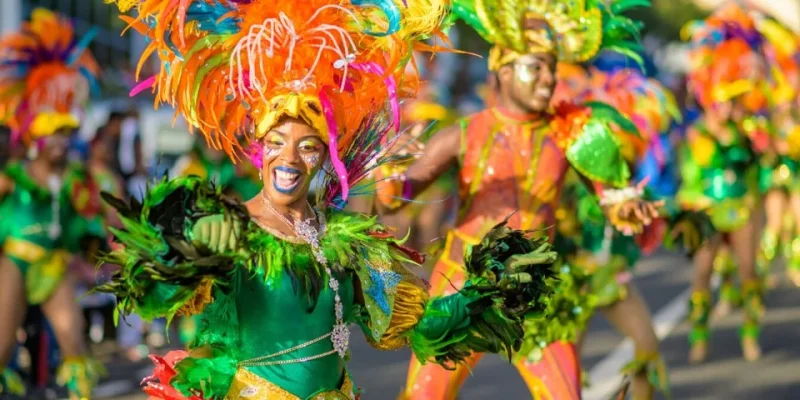
Fun, color, festival, explosion! Every Sunday from Epiphany to Ash Wednesday, carnival groups take to the streets to delight everyone.
Masks, or disguises
Preparations are important and well-orchestrated: the carnival "theme" is chosen by the carnival federations, and each island has its own committee. Then the groups get organized: they design their costumes and make them with care.
Traditionally, slaves used Carnival to practice ancestral religious rites that were forbidden by the Catholic authorities of the time. Masks were those of African deities or tribes of origin, and initiation and exorcism ceremonies were performed. Today, the Masque or "Mas" has lost its sacred character, but the historical reference is alive and the emotions experienced are real.
According to the African concept of the term, the "Mas" refers to all the elements that cover a person from head to toe, unlike the Western concept, which refers to the face. A person who enters a "Mas" loses his or her personality, as it were, and becomes the Masque, "Mofwazé an Mas" (the Spirit of the Mas).
Mas" are traditionally made from jute, banana cloth and other natural materials. Some groups (Voukoum, Basse Terre) have retained their attachment to tradition. Jute bags or cloths are transformed into costumes, Portuguese mops are used as hair, newspapers (in black and white) are cut into strips to make the impressive "Mas a fwèt" (Whip Mask), "boutou" (tree branches) and shells or roots are the finishing touch to the traditional "Mas".
Paint covers the hands, face or body parts left exposed by the Mas, e.g. blue paint for the "Mas tirayè Sénégal" (Senegalese Tirailleurs Mask), sometimes other materials are used depending on the day or theme: flour for the "Mas a man ibè" (Mask of Dame Hubert), table oil and roucou for the "Mas a Roukou" (Roucou Mask), sugarcane molasses, battery syrup and soot for the "Mas a kongo".
On the other hand, modernity obliges, and some groups (Waka, Basse-Terre) parade in ceremonial outfits, reminiscent of Brazilian or Italian carnival. In these cases, they choose more contemporary, even state-of-the-art materials! Costumes are made from modern materials such as lurex, satin, sequined Lycra, and even color-changing gold/silver hologram paper fabric!
A blend of modernity and tradition, West Indian carnival surprises with its strength and diversity.
Papiyon volé cévolé nou ka volé!