Toutes les informations concernant La Faune aquatique de l'île de Saint Barthélemy
_Coquillages et Crustacés
Les Burgots
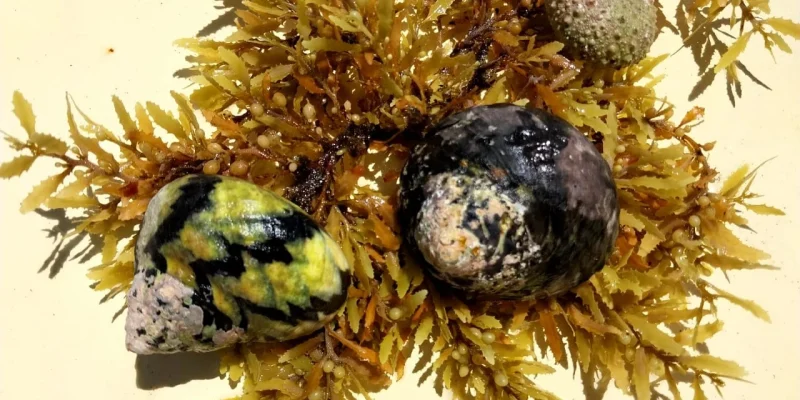
You've probably all seen them! These shellfish are stuck to the underside of rocks, and harvesting them can be a tricky business! Once widely used in Creole cuisine, they are now protected and no longer found on local tables. But beware! Burgot fishing is only authorized for professional fishermen in the St Barthélémy Nature Reserve.
Le Dollar Caribéen
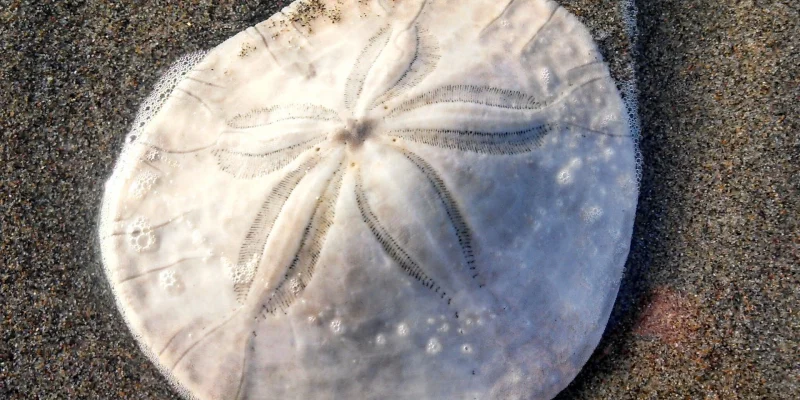
The Caribbean dollar, commonly known as the sand dollar, is a small purple-gray echinoderm shell with a flattened, circular shell decorated with a five-pointed star. It takes its name from its resemblance to an old American dollar. The dead shells wash up on the sand, where the sun bleaches them. What makes it so unique is its perfect radial geometry, which in its structure and design embodies the rules of the golden ratio and divine proportion, as well as esoteric symbols worthy of all interpretations: a Christian legend has it that the shell contains the life and death of Christ.
Le Lambi
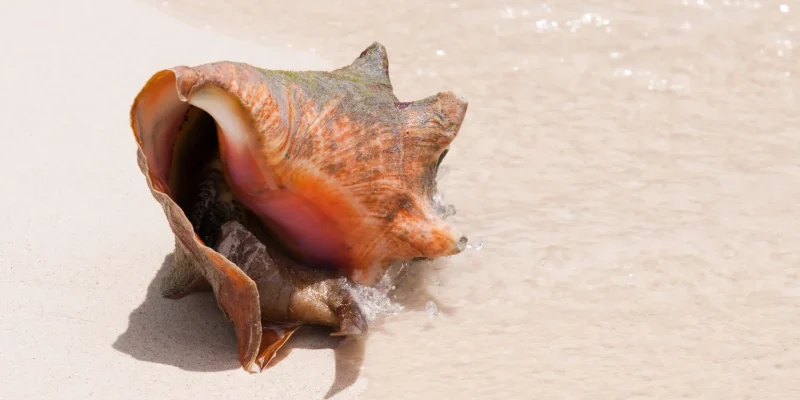
Here's a shellfish with a rich history! The lambi, also known as the "Giant Strombe", has been part of the seabed for many years. Appreciated over the centuries as much for its delicate flesh as for its pink mother-of-pearl shell, it is at the heart of Creole cuisine, in fricassee, brochettes, boudins and other equally delicious preparations; the conch shell, for its part, is even used as a musical instrument.
In the days of slavery, the conch shell was used to communicate and announce the arrival of fishing, or an important life event.
A victim of its own popularity, however, it is now protected to ensure it has a long life...
La Langouste
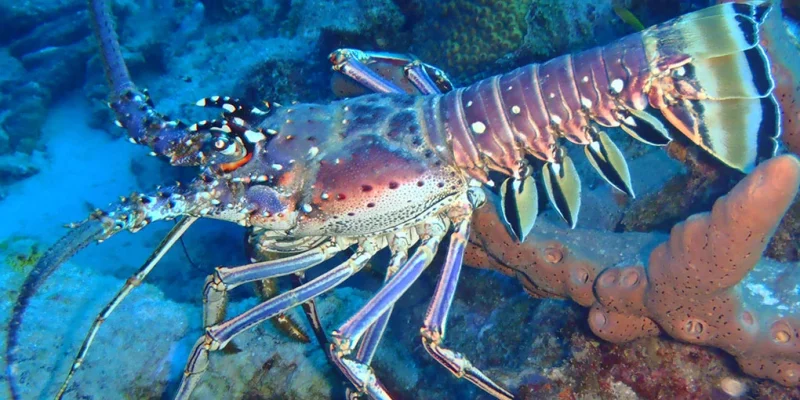
Adept at hiding on rocky bottoms, the spiny lobster can walk with its legs, or swim by propelling itself backwards. If you've ever tried to catch one with your bare hands, you'll know just how fast it can be! On the island, the Brazilian spiny lobster (Panulirus guttatus) is the most popular. Measuring around 15 cm, its carapace has white spots and it can be found at depths of up to 20 meters.
Les Oursins
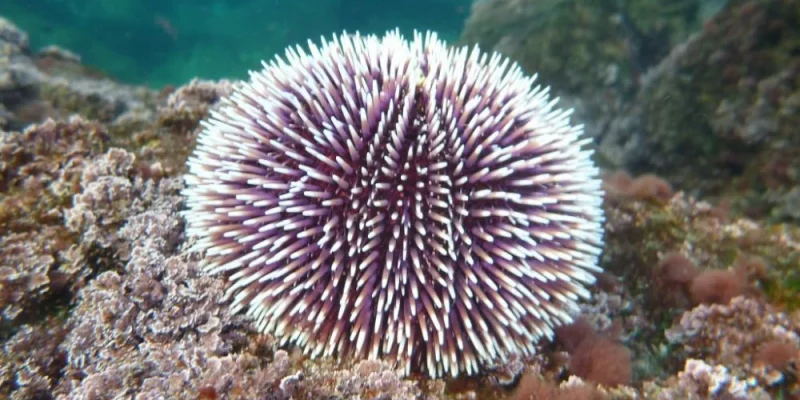
Part of the Echinidae family and nicknamed sea urchins, these small marine organisms have spines all over their bodies. There are several species on the St Barthélémy seabed, but the best known are the white and black ones.
Note that in the West Indies, it's the white sea urchin that's eaten, unlike in Europe where it's the black sea urchin.
Generally herbivorous, they sometimes eat mussels and sponges and are mainly found on the coast.
_La Tortue marine
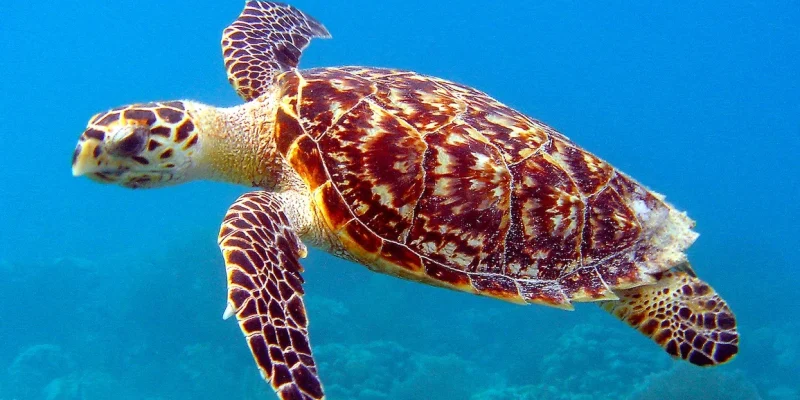
Maybe you'll be lucky enough to spot one! While the Leatherback Turtle sometimes passes close to St Barths, the two most common species are the endangered Green Turtle, which becomes a herbivore only as an adult, and the slightly smaller Hawksbill Turtle. All species of sea turtle are protected, so don't hesitate to contact the Réserve Naturelle de St Barthélemy if you come across one that is injured or endangered.
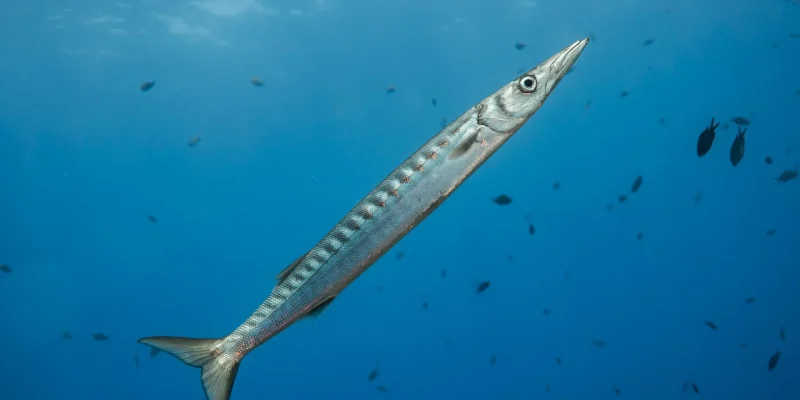
_Le Barracuda
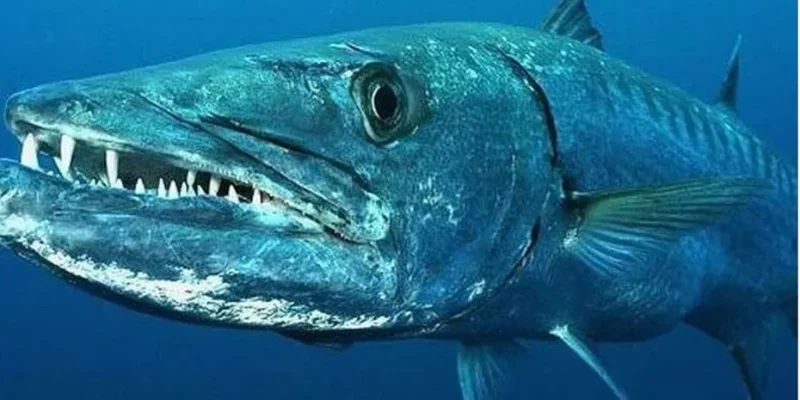
Maybe you'll be lucky enough to spot one! While the Leatherback Turtle sometimes passes close to St Barths, the two most common species are the endangered Green Turtle, which becomes a herbivore only as an adult, and the slightly smaller Hawksbill Turtle. All species of sea turtle are protected, so don't hesitate to contact the Réserve Naturelle de St Barthélemy if you come across one that is injured or endangered.
_Le Chirurgien
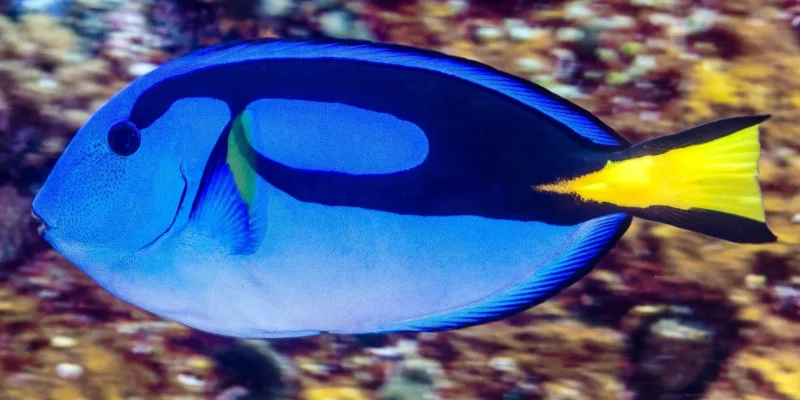
Surgeons" are small fish with flat, oval bodies and small mouths. There are several types, including blue, black and striped. They take their name from a pair of extremely sharp spines at the base of their tails, reminiscent of scalpels. Herbivores, they are unique to the coral ecosystem.
_Le Corail
No, coral isn't a plant, it's an animal! Called a "polyp", it has either 8 tentacles or a multiple of 6, which it takes out at night in search of water and food. They generally live in colonies and spend their lives building the coral reefs that can be admired on scuba dives.
There are several species in the Caribbean, each with its own particular characteristics.
Le Corail Cerveau
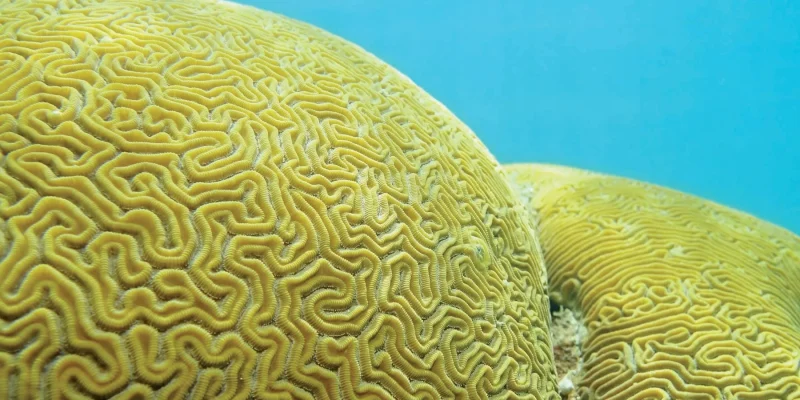
This one's impossible to miss! Shaped like a ball, it can reach up to 1 metre in diameter and instantly reminds you of a brain! You'll be able to observe a multitude of them underwater, of all sizes. Suffice it to say that diving in the middle of Corail Cerveau is an astonishing spectacle! An incredible blend of underwater beauty and human brains!
Le Corail Corne de Cerf
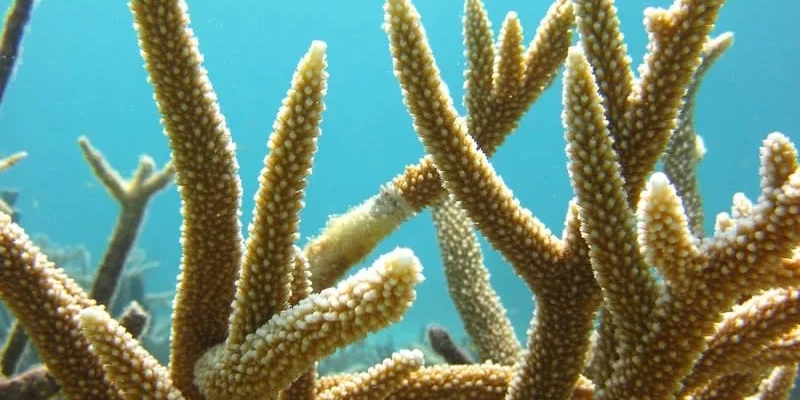
No need to wonder where its name comes from. Just look at it! Its branches are reminiscent of deer antlers. Found in the Atlantic, Indian and Pacific Oceans, it grows as a bush or a plateau, and can grow up to 10 cm a year! An ideal refuge for many species of fish and crustaceans.
Le Corail Corne d'élan
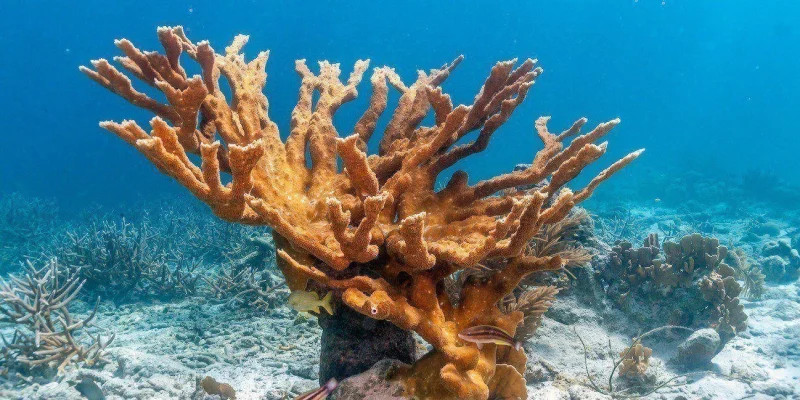
Very widespread and brown in color, its name comes, of course, from its many-branched shape. This incredibly fast-growing species is home to numerous colonies of fish. A true spectacle of underwater life, it can reach up to 3 meters in diameter.
Le Corail feu
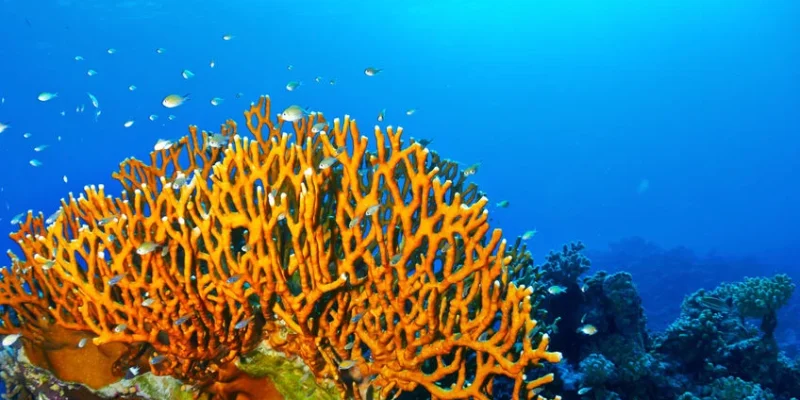
Usually yellow or brown in color, it appears in the form of plates, various branching forms and vertical leaf-like structures, and can grow from 30 to 60 cm. Divers will certainly know it from having "grazed" it a little too closely! Related to jellyfish, you'll feel a strong burn on contact. All the more reason not to touch underwater wonders "with your eyes"!
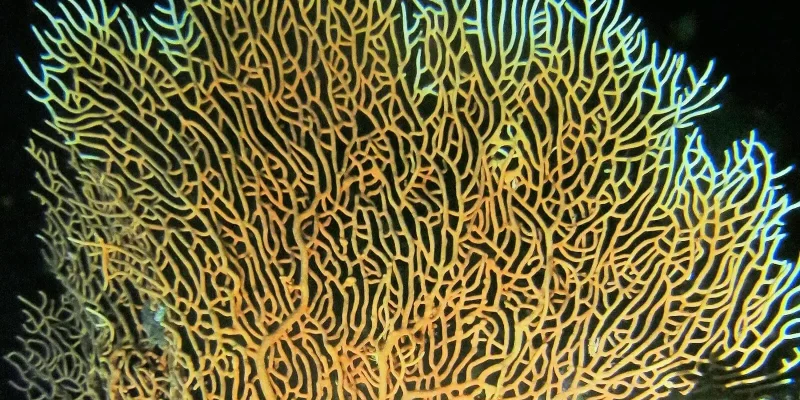
Les Gorgones
No more brown this time! Gorgonians, also known as "bark corals", are brightly colored! Some species prefer sand and mud to hard surfaces. The fan-shaped colony has a flexible, hard skeleton, and each polyp has eight tentacles to filter and consume plankton.
Le Corail Corne d'élan
Very widespread and brown in color, its name comes, of course, from its many-branched shape. This incredibly fast-growing species is home to numerous colonies of fish. A true spectacle of underwater life, it can reach up to 3 meters in diameter.
Le Corail Corne d'élan
Very widespread and brown in color, its name comes, of course, from its many-branched shape. This incredibly fast-growing species is home to numerous colonies of fish. A true spectacle of underwater life, it can reach up to 3 meters in diameter.
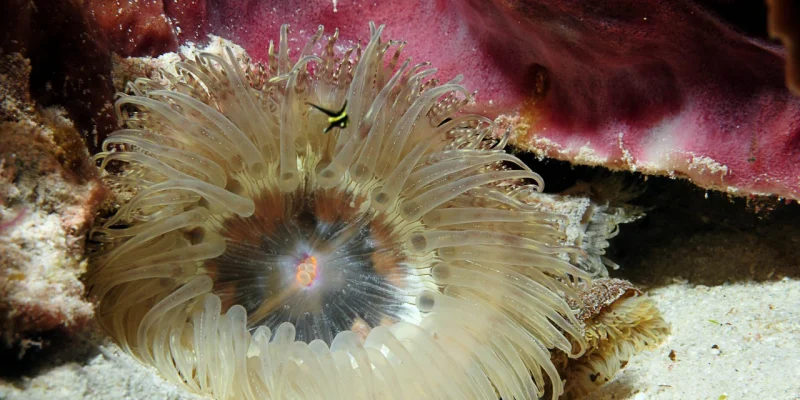
_Les Anémones
Previously thought of as plants, anemones are actually animals. Known as sea nettles, they're as pretty as they are stinging. So look, but don't touch! Its soft, gelatinous body is surrounded by several poison-filled tentacles. It has only one mouth, no eyes, ears or brain. Carnivorous though it is, it doesn't chew its prey because it has no teeth. The anemone is hermaphroditic.
_Les Bécunes
A member of the barracuda family, barracudas are more likely to be found in pastures than on reefs. Great consumers of fish and squid, they live in schools but are far less curious than barracudas and just as harmless!
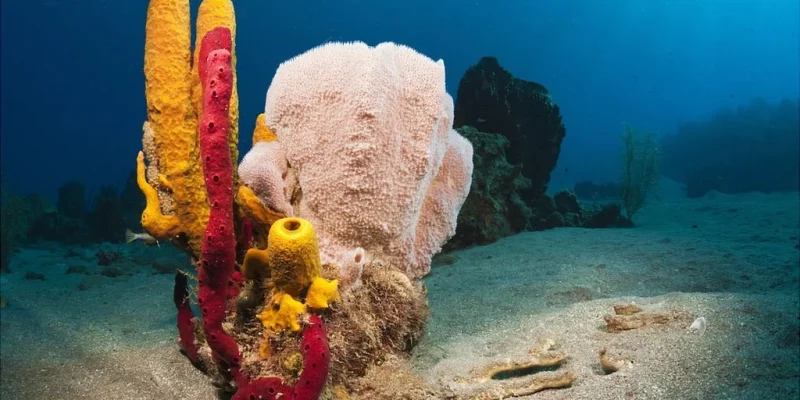
_Les Eponges
Sponges, known as the gold of the sea, are immobile marine animals. There are over 9,000 species worldwide, living in shallow waters. This animal, whose body is a lifeless mass, has no respiratory, genital or excretory apparatus: its anatomy is designed to filter water.
_Les Etoiles
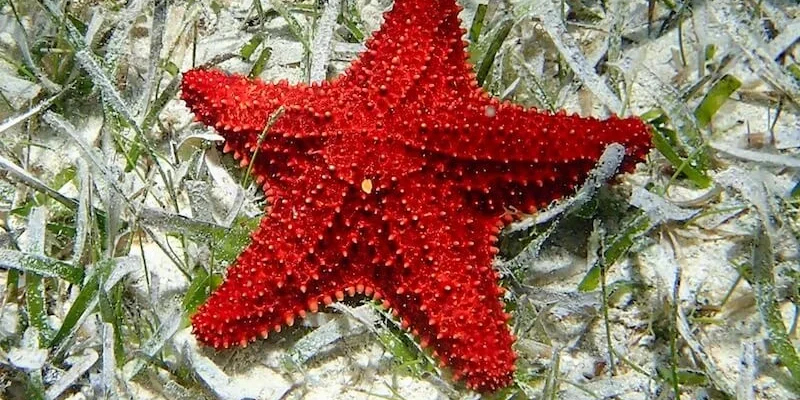
Starfish are amazing marine animals. They fascinate us with their brilliant colors, speed and diversity. In the Caribbean, there are 116 star-shaped species with 5, 16 or 20 arms. Underneath their gentle exterior, starfish are ferocious predators!
_Les Pisquettes
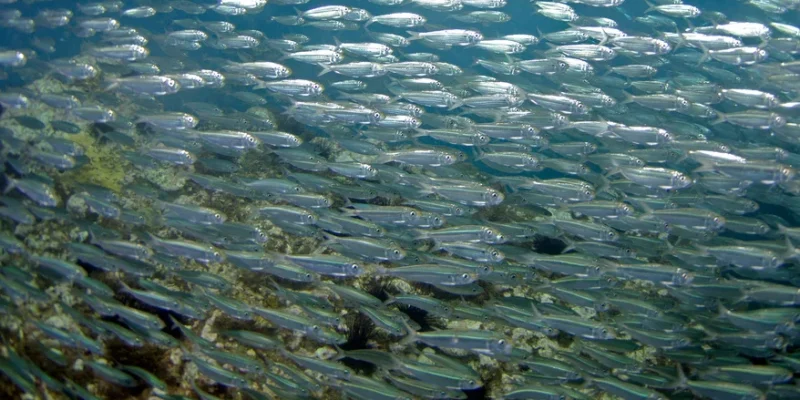
There are several types of small coastal fish: white, blue and square! Living in schools, they move around in low-lying waters and feed on zooplankton. You may even come across a school of impressive size...but of course, they're harmless!
_Les Raies
La Raie Pastenague
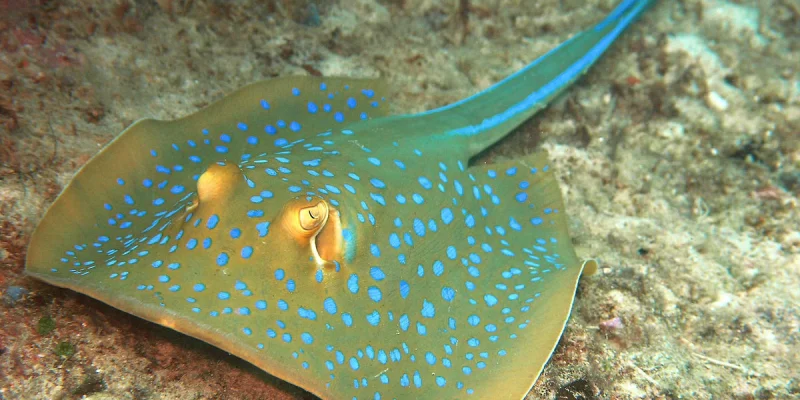
The stingray is very common in the Caribbean. A real predator of small fish and invertebrates, it hides under the sand. Beware: it has a venomous sting. Stay safe...
La Raie Aigle
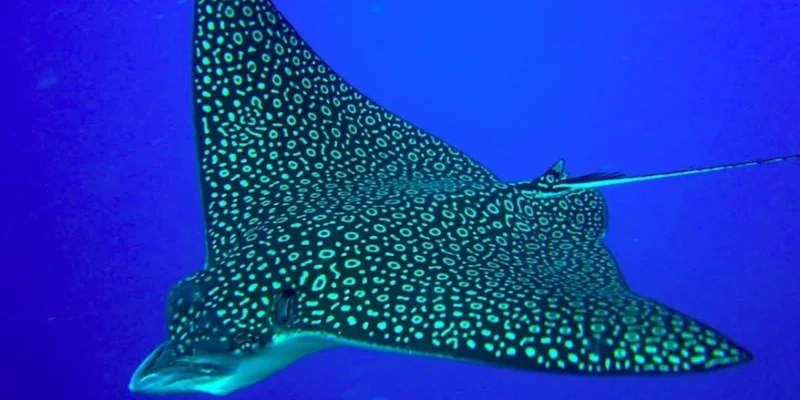
The Eagle or Leopard Stingray is impressive. It can reach a wingspan of 3 meters and weigh up to 230 kg. It also has a tail equipped with one to six venomous stingers. It is sometimes found in open water. An excellent swimmer, it offers a unique spectacle and seems to fly. A unique experience if you're lucky enough to spot one!
_Les Requins
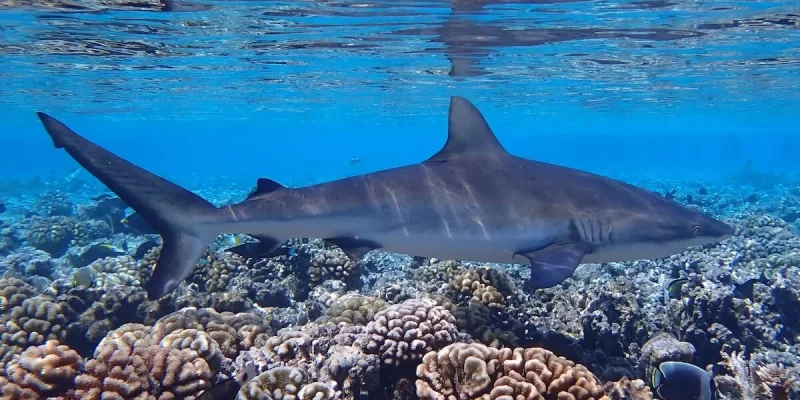
Requin Gris de récif
It can be recognized by the black coloration on the tips of its pectoral and caudal fins. With its massive silhouette and rounded snout, it measures around 2 meters and feeds mainly on fish, cephalopods and crustaceans. Curious by nature, it may approach divers, only to leave again!
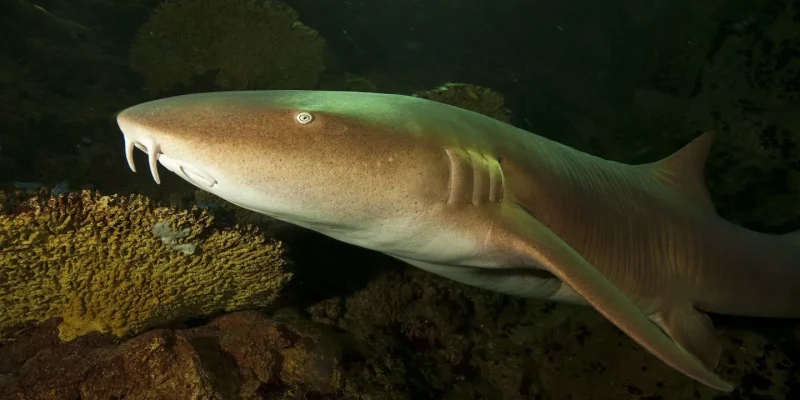
Requin Nourrice
Also known as the "sleeper shark", it is quite common in the Caribbean. It can be found sheltering in rocky cavities or simply resting on the seabed! Harmless, it feeds mainly on crustaceans and can bask on the sand at will, as it doesn't need to swim to breathe!
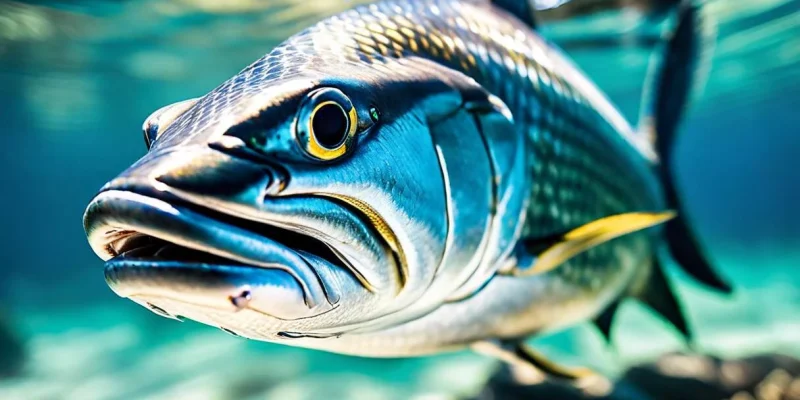
_Le Tarpon
A member of the Megalopidae family, the tarpon is a warm sea fish. Also known as "Gran Tékay" in the West Indies, this silvery fish can measure up to 2.5 m and weigh 150 kg! A fearsome predator, it feeds on fish and crustaceans, and you're sure to catch a glimpse of it on a dive, or not far from the port, as it feeds close to shore.
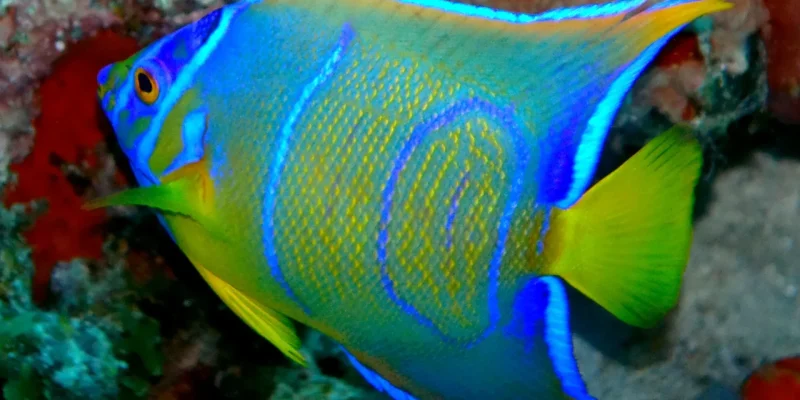
_Poisson-Ange
The name "angelfish" is actually given to several brightly-colored fish from different families. Small, colorful fish, they live close to the reefs, feeding mainly on sponges and algae. It's not uncommon to come across them while diving or snorkeling.
_Poisson Lion
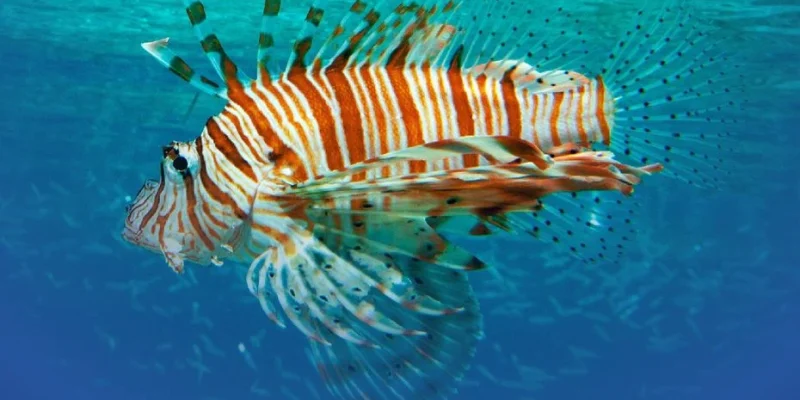
The Pterois Volitans is also known as the Lion Fish or Flying Scorpionfish. Normally found in the Indian and Pacific Oceans, it arrived in the Caribbean after a hurricane devastated a Florida aquarium in 1992. An invasive species, it disrupts the marine ecosystem. A highly prolific predator (females can lay up to 40,000 eggs at a time), it is also potentially dangerous for humans, as it possesses numerous venomous spines. On the plus side, it can be eaten. Its flesh is highly prized!
_Poisson Perroquet
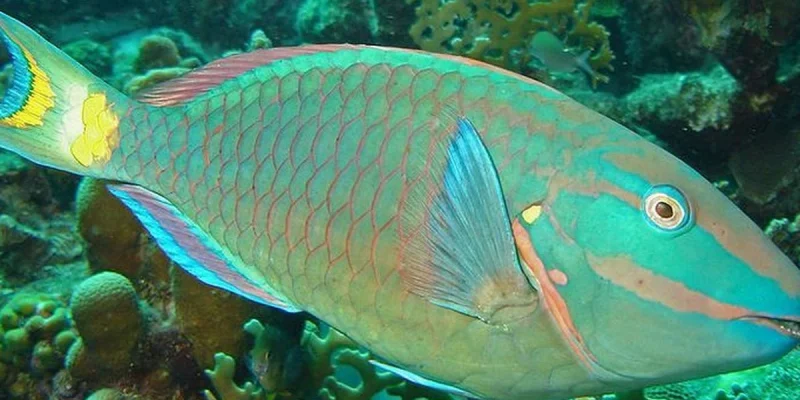
A true tropical fish of a thousand colors, they are found in shallow waters around coral reefs. Mostly herbivores, they play a vital role in the production and distribution of coral sand.
_Sergent Major
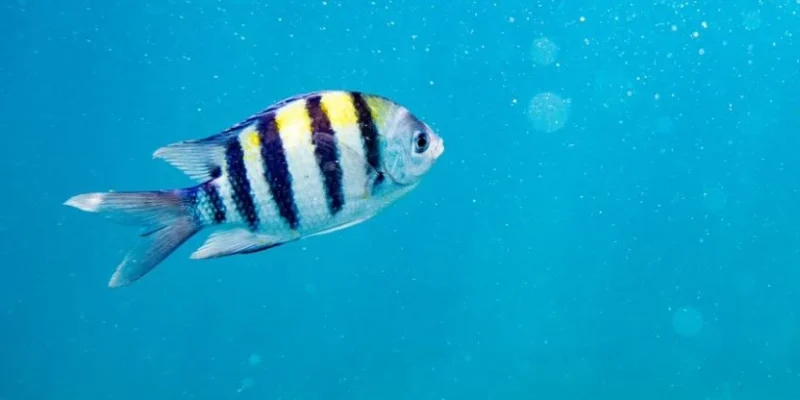
Very common, it can be observed in groups near reefs, where it likes to hide! This large, dark-striped fish feeds mainly on algae, small fish and zooplankton.