TOURIST GUIDE
Paradise Islands

TOURIST GUIDE
Paradise Islands

All information about Curiosités de l'île de l'île de Saint Barthélemy

Félicité Estate

100990207_244838226964886_535545910294216704_n
Discover two centuries of rich history, during a personalized guided tour offered by your hosts,

Arletteher brother Alain Magrasand their team. As you tour, you'll be immersed in the past, from Swedish times onwards, as each room is filled with archives and artefacts dating back to St Barthélemy's ancestral traditions and heritage.
 
Arlette Magrasthanks to her assiduous and meticulous research, will give you a retrospective on the history of the island and her family.

You'll then have the pleasure of strolling through a magnificent tropical garden, created by Alain, where you can admire aromatic, medicinal and ornamental plants native to the island.
 
Pause to daydream by the waterfalls, amidst a circus of rocks and ruins from the Swedish era. And don't forget to visit the small boutique, brimming with creations from nature and homemade jams. 

Community Hotel

Hotel_collectivite
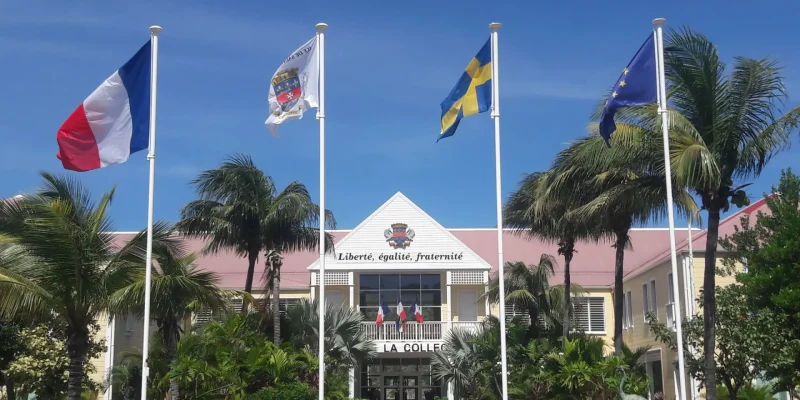
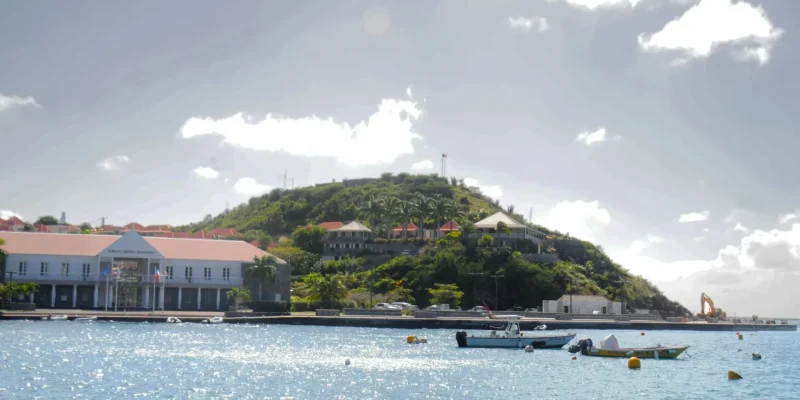
Inaugurated in January 2002, the town hall became the community hall in July 2007. Saint-Barthélemy was transformed into a COM by the organic law of February 21, 2007, under the name of "Collectivité de Saint-Barthélemy".
Take advantage of your stroll to admire the bronze works ("Le Carnaval des Animaux" ) by Bjorn Okholm Skaarup, a Danish artist whose talent and sense of humour
appeal to adults and children alike.

The Dinzey House

house_stbarth

(le Brigantin)
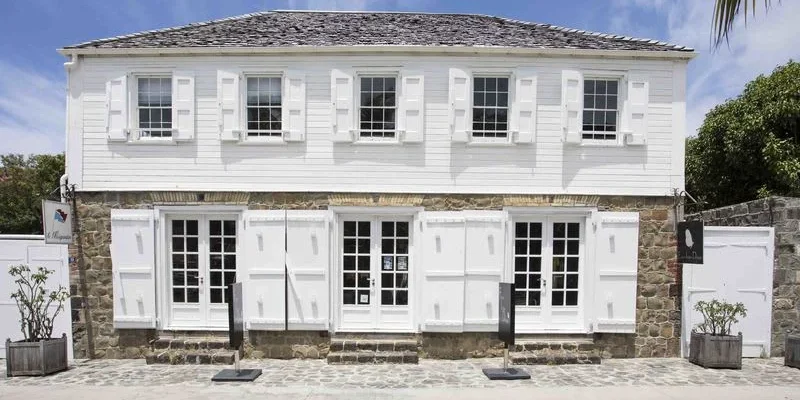
This house, built between 1822 and 1860, is one of the few survivors of the great fire of March 2, 1852. It is in very good condition, inside and out, thanks to the careful restoration work undertaken by its current owner, who is also Honorary Consul of Sweden. The house is also known as the "Brigantin"
(restaurant in the 1980s).

La Maison du Gouverneur (Former Town Hall)

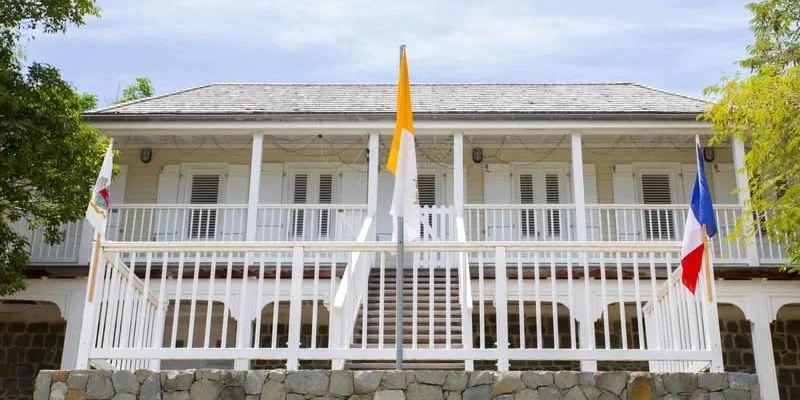
This house, built around 1796/1799, first belonged to a private individual, Daniel Öström, and it wasn't until 1816 that it officially became the Customs House. In 1861, it was converted and Governor Carl Ulrich moved in. When St. Barthélemy was returned to France, the house became state property.
French. Until 2001, it served as the Town Hall, until the new building, near the Wall House on the other side of the harbor.
The building is listed as a historic monument.

The Judge's House

This house was built around 1786 for the island's judge. In 1805,
the Swedish West India Company cedes the house to the Swedish government. In 1833, the post of judge was abolished and the house fell into disrepair. It was restored and became the governor's residence. Later, it was sold at auction to the harbor master, who sold it to the French government when the island became French in 1878. Today, it's a private home.

The town's Maison du Major

A typical merchant's house dating from the 1780s, it was rebuilt in 2006 to its original appearance. Originally intended for the town's Major, in charge of the garrison and police, the house suffered extensive damage during the cyclone of 1837, but was restored and temporarily used as an administrative building, then as the Governor's offices. It was in this house that, on March 16, 1878, the deed of retrocession of St. Barth to France was signed. It also served successively as a school, a courthouse and a fire station over the course of the last century. 

The Brick House

brick-house
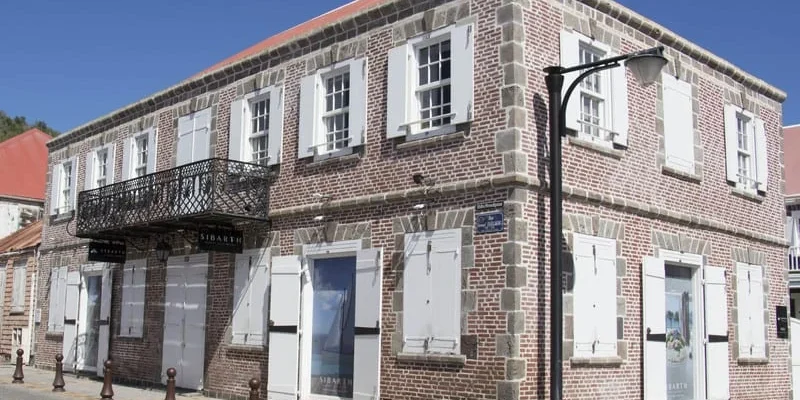
This house was built in 1841 for a wealthy landowner.
The first-floor balcony is the most elegant, where the
owner and his family. The first floor is used alternately for shops and as storage space. Historically, stone has always been a more expensive material than wood. Dressing wooden houses in stone is therefore a way of showing off wealth and success.
An interesting detail is the elegant solution found for rainwater run-off through gutters camouflaged in a cornice that crowns the facades of the house.

The Anchor

ancre-st-barth-1024x742
Resting on a base, this anchor weighs in at 10 tonnes of iron.
She was found in 1981, when a tugboat picked her up by chance. It's not known whether she was dragged from St. Thomas (Charlotte Amalie), picked up on the way by a container ship, or whether, as some researchers claim, she came from an American warship.

Retrocession Square

This square, named in August 2000, was originally known as "Place du Bicentenaire". It commemorates a major event in the history of Saint-Barthélemy: the island's retrocession to France, after 3 years as a possession of the Swedish Crown.

La Place Vanadis
7004382834_cd4af96dff_b
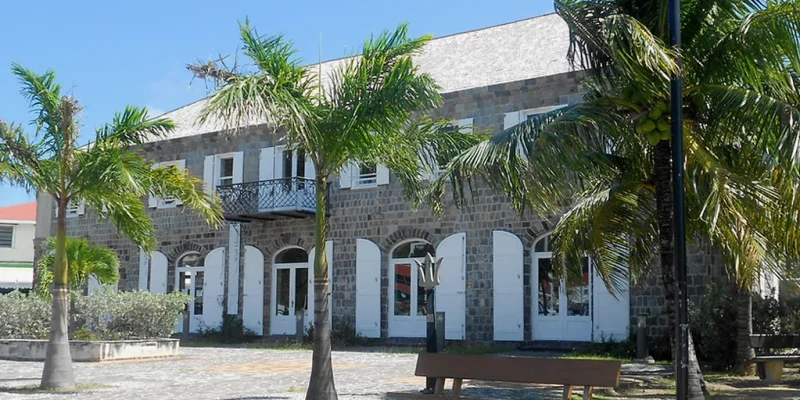
Place Vanadis was inaugurated on November 20, 1996, and named after the frigate Vanadis, the last Swedish warship to leave Saint-Barthélemy when the island was ceded back to France on March 16, 1878. The trident of Neptune on the square was donated by the Swedish Order "Neptuni Orden" in honor of the sailors and the friendship between Saint-Barthélemy and Sweden. The Order's aim is to support sailors, their widows and children.

The Arawak

savaku-the-arawak-spirit-of
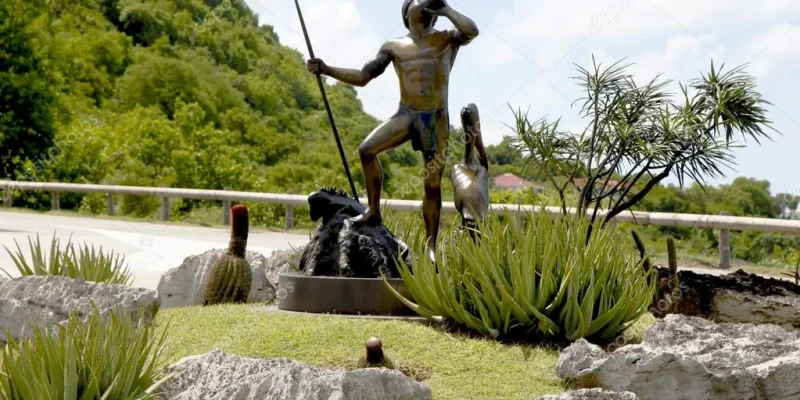
Symbolizing the "soul of St. Barth", this warrior, armed with a spear in his right hand, protects his rock. Together with the lambi, he evokes the cry of nature. At his feet, a pelican, symbol of the island, evokes the air and survival through fishing. The iguana symbolizes the earth, and the wisdom and patience we all need. All three are standing on a simple rock, which from the air looks like St. Barthélemy.

The Sub-Prefecture

5eea99a702555_sous_prefecture_stbarth-1402338

Construction of this sturdy stone building began in the early 1800s. It was to be the island's first school, but would later be used as a meeting place for meetings, parties and galas. In 1819, the basement became the local prison, and was occasionally used as a school or canteen during the last century. Since 1975, it has housed the prefectoral services, the headquarters of the French government in St. Barthélemy.

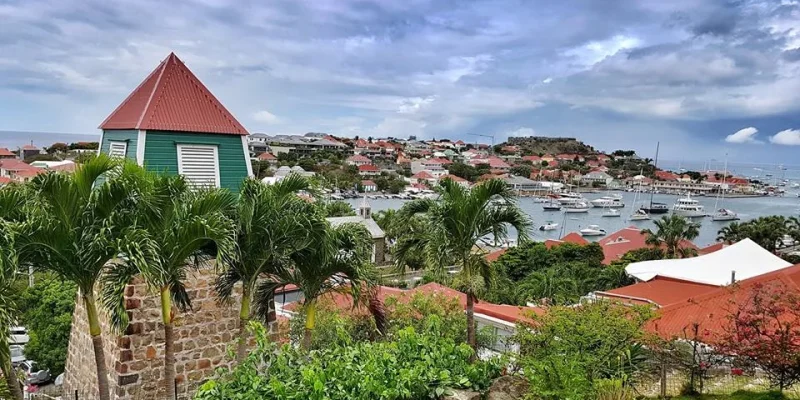
The Swedish Bell Tower

-hjbdmx
Like many other Gustavia buildings, the bell tower was seriously damaged by the cyclone of August 2, 1837, but was soon restored. The bell was used to call worshippers to church services, which had previously been announced by the garrison drums.
When it was restored in 1931, the bell tower was fitted with a clock facing the town.

Fort Gustaf

-zde5uh

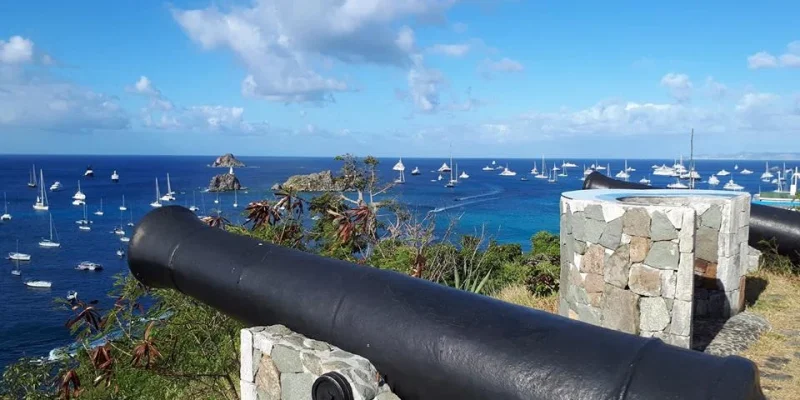
Built on the ruins of a fort built by the French in the late 17th century, this was Gustavia's most important fort during the Swedish period. It housed a barracks, a stone guardhouse for a dozen men and a wooden hut. Towards the end of the Swedish period, the battery fell into disrepair, and all that remains of Fort Gustaf are the stone part of the guardhouse and the tanks behind the weather station, four cannons, two of which are made of fiberglass at the foot of the lighthouse, and two others near the weather station, on loan from the Kariskrona Maritime Museum (Sweden) since December 2011. These cannons recall the days when Gustavia was a fortified city. In 2004, the weather station was renamed "Espace Météo Caraïbe", offering a meteorological museum space. In 2015, the weather station became "Espace Gustaf III", now dedicated to the Swedish past and Franco-Swedish friendship.

Fort Karl

You're standing on its ruins. The fort was named after King Gustav III's brother, Duke Karl. This unimpressive defensive battery consisted of two cannons with a four-pound charge of gunpowder. A small guardhouse housed the town militia in 1809, but soon disappeared. In 1844, it was reported that there was no flagpole or other construction. All that remains today are a few stones, the remains of a powder magazine, and some cobbled areas. It was renovated in 2011.

Fort Oscar

Fort_Oscar_and_the_Hotel_de_Ville_at_the_entrance_to_Gustavia_harbor,_Gustavia,_St._Barthelemy_-_panoramio

Fort Oscar once housed the listening services of the DGSE, the French counter-espionage service. Today, it houses the gendarmerie brigade. The building is closed to the public, but you can easily observe it from the heights of Gustavia harbor.

The Anglican Church

eglise-anglicane-St-Barthelemy-1024x684

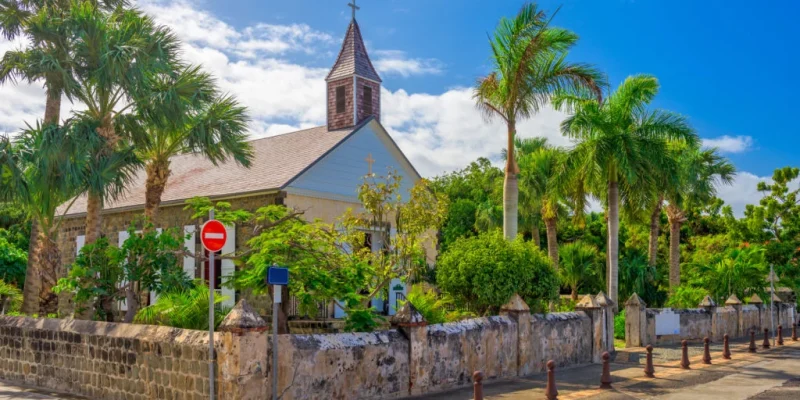
The Anglican Church was built between 1853 and 1855. It is a small church, its walls constructed of local stone, except for the facade facing the harbor, which is made of limestone. The roof, originally covered with wooden shingles (essentes), is now made of corrugated iron. The small decorative bell tower has retained its shingled roof as before.

The Catholic Church

St_Barths_Lorient_Church_1
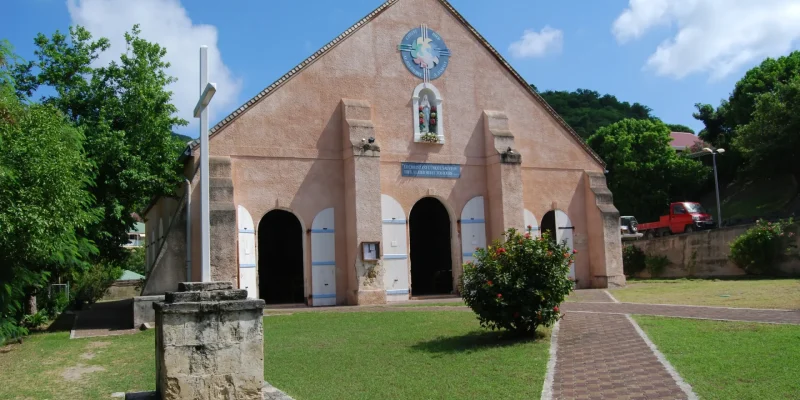
Construction of the Catholic church "Notre Dame de
l'Assomption" took five years and was completed in 1829. The Spanish-influenced style is quite unusual for a religious building in the French West Indies.
Thanks to a meticulous restoration in 2006, the church has been restored to its original beauty. Next door is a building that once housed the parish hall. Ceded to the Collectivité by the bishopric, it is now the Théâtre du Paradis, which hosts shows and artistic activities.
On the other side of the street, a funeral chapel has been built in honor of Sister Armelle, who died in 1947, and a rotunda for the Sacré Coeur in honor of the sailors of Saint-Barthélemy. On the slope behind the church are the presbytery and the bell tower. The latter was built separately, on the hillside, to avoid damage to the church in the event of the bells falling during a cyclone, but also so that they could be heard from all over the town.

Gustavia Lighthouse

PROFILE
Whether for the building or the view, this walk up the hill is well worth the detour!
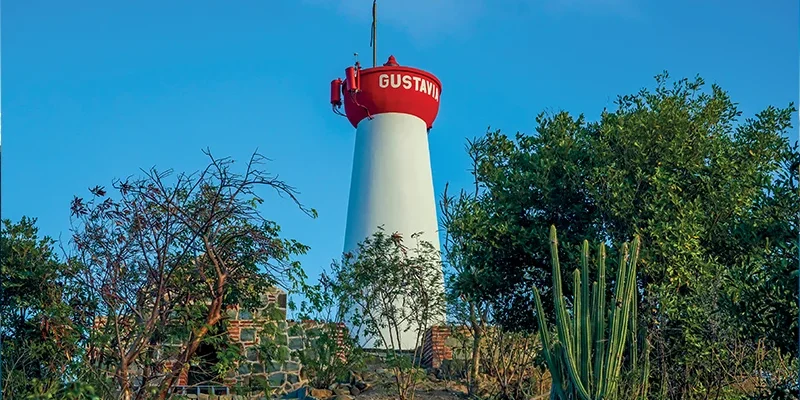
Built in 1961 and located next to Fort Gustav, the Gustavia lighthouse offers an exceptional view.
Now fitted with an electrical system, its original lantern is on display at the Musée de St-Barthélemy.

The Port of Gustavia

discover-gustavia-port
Until a few years ago, Gustavia was just a small town.
a small town with a few houses surrounding the harbor. At the time, only a few Swedish buildings were in ruins, along with a couple of shops and a few dwellings.
In the early 80s, to cope with the influx of tourists,
the commune commits to infrastructure development
port. Over the years, Gustavia has become a veritable city, combining modernity with the vestiges of a tumultuous past.

The Lutheran Presbytery

This house was built around 1790, for St. Bartholomew's first Swedish pastor, who lived there for a year.
After Father Thorell's death, the house was rented out to various people, including physician and surveyor Samuel Fahlberg, who stayed there until 1803. After being damaged by the cyclone of September 21, 1819, the presbytery was restored and became a school for girls and boys in separate classes. This school was reserved for children from "good families". The former Swedish presbytery is now one of the island's oldest restaurants. It housed the first offices of the Sous Préfecture in 1963.

The Swedish Presbytery

7wwhdihlxpku1bz809viavdqkxj6

Built for the first Swedish pastor at the end of the 18th century, the presbytery later became the home of the physician and surveyor Samuel Fahlberg. After the cyclone of 1819, it became a mixed school and finally a restaurant.

The Wind Cases

6x35k41ae2nht7jw1xjlulaocmw6
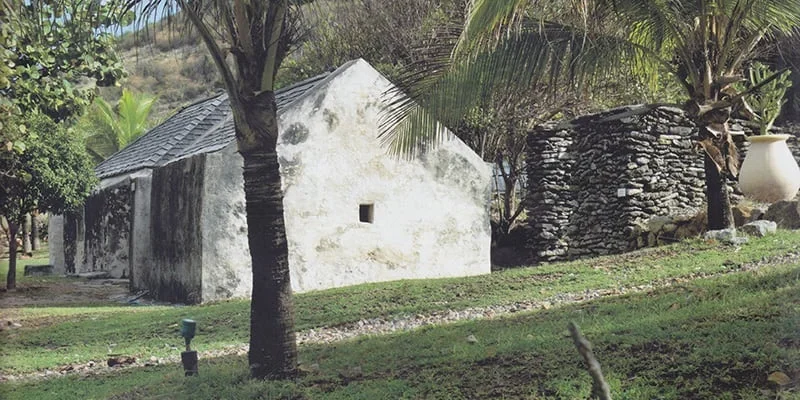
Dating from the 18th century, the "wind huts" were built from coral, mancenilla wood and reclaimed timber.
They are designed to limit the wind. They were the homes of people who lived "upwind".
They have now been refurbished and powered by solar energy.

Les Salines

gljiibh1slffkdtzl8mguujs7f3z

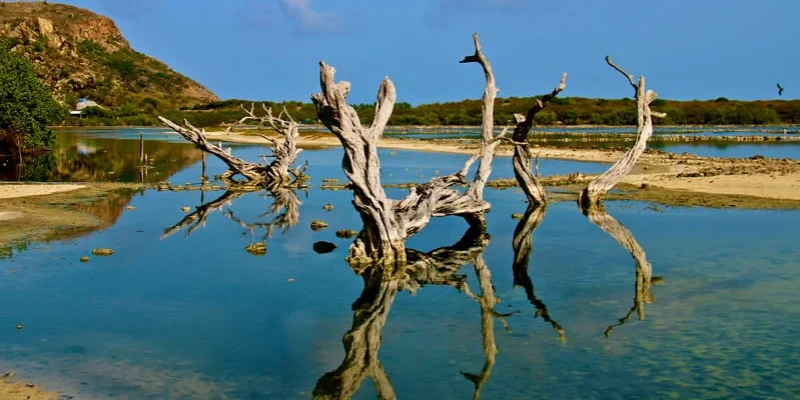
Three centuries of salt mining have given this place a unique and magical landscape! As soon as the Order of Malta acquired the island in 1651, salt became one of the main economic activities. But in 1972, the harvest came to a halt... Today, you can still see natural salt sculptures, where freshwater birds come to nest. But the story doesn't end there! Recently, one of the descendants of the salt farmers decided to revive the harvest, in honor of his family's memory. His aim is to revive this important local tradition. 

The Wall House

wall-house-scaled
This stone building is one of Gustavia's largest. Its history is confusing. According to Samuel Fahlberg's maps of the town, some believe it was used as a performance and entertainment hall, others think it was a hotel or a venue for political conferences, or simply a store. In Swedish times, the building was known as "Maison Steinmetz". Rooms could be rented from local residents.
As for the origin of the name "Wall House", some believe it refers to the stone walls, which were the only part of the building to remain intact over the years.
Today, the first floor houses the territorial museum. Upstairs is the town library. In the courtyard remains the ruin of a stone and brick bread oven.

Johnny Hallyday's grave

lesprit-johnny
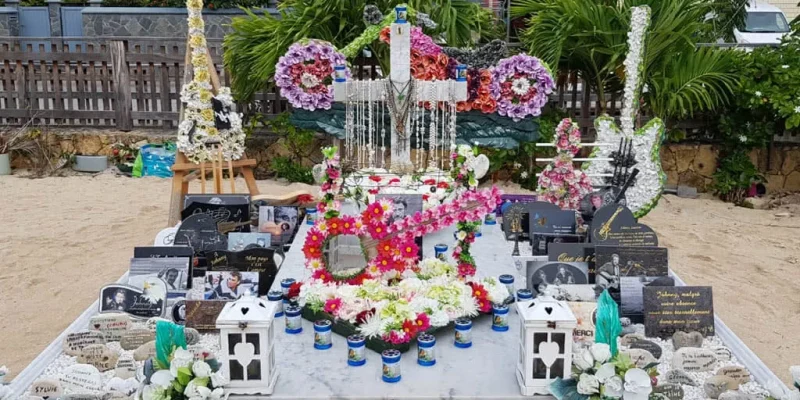
France's biggest rock star Johnny Hallyday, whose real name was Jean-Philippe Smet, died of cancer on December 6 at the age of 74. He had four children. David, the eldest, whom he had with singer Sylvie Vartan, Laura Smet, born of his union with actress Nathalie Baye, and Jade and Joy, adopted during his last marriage to Laeticia, with whom he shared his life for 21 years. 
In love with the island of St Barth, where he lived for several months of the year, the star wished to be buried in the Lorient cemetery. 
Since then, many of his loyal fans have made the trip to St Barth to pay their respects at the tomb of their idol.